Oura Ring and my longevity path
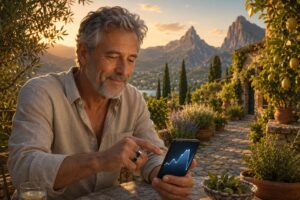
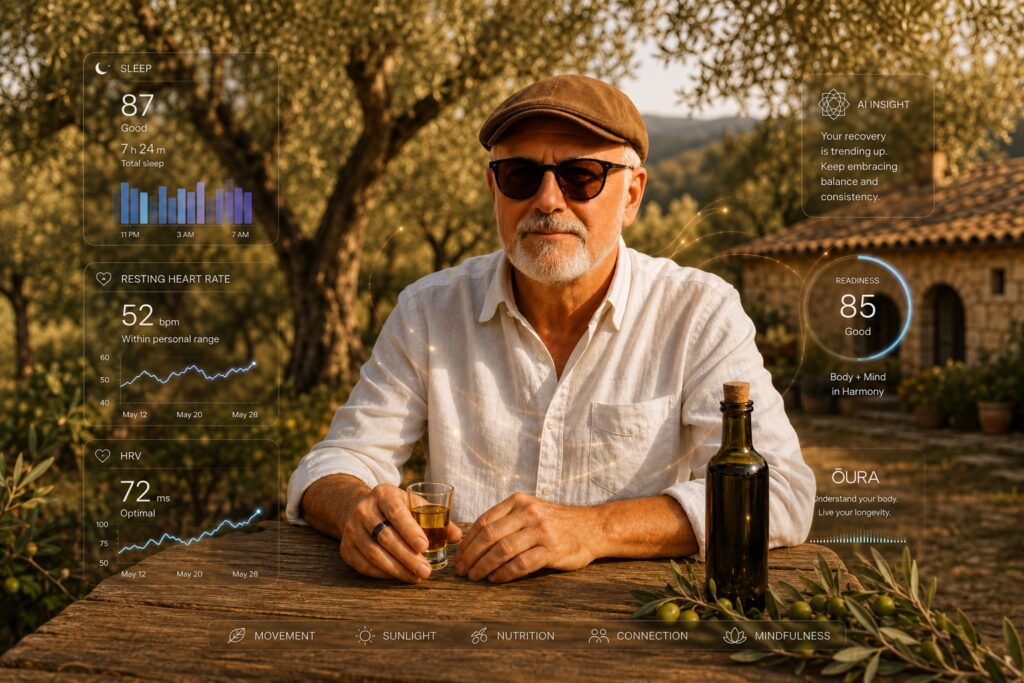
I have been wearing an Oura Ring for several months now, and it has quietly become part of my longevity lifestyle. What interests me most is not the gadget itself, but the way it turns parts of daily life into patterns I can actually observe: sleep, recovery, activity, stress, resting heart rate, and heart rate variability. In that sense, the ring is not a judge; it is more like a small, persistent witness.
Its strength is continuity. The ring collects data day and night, which means it can reveal what short-term memory or intuition often misses. That is especially useful for behaviors that feel harmless in the moment but leave a clear physiological trace a few hours later.
What the ring showed me about alcohol
One of the clearest examples for me has been alcohol. The ring made it visible that an evening with alcohol does not only concern the liver or the next morning’s mood. During sleep, alcohol tends to keep the cardiovascular system busy: resting heart rate rises, heart rate variability drops, and recovery becomes less convincing, even when sleep may appear subjectively “fine.”
Oura’s own large-scale member data point in the same direction: after drinking, most users show higher overnight heart rate, elevated resting heart rate, lower HRV and more fragmented sleep. Seeing this on my own graphs made the connection much more tangible than any abstract advice about “drinking less in the evening.”
How accurate is all of this?
This does not mean every number should be treated as absolute truth. Wearables are useful, but they are not identical to medical diagnostics. Validation studies suggest that Oura performs well for nocturnal heart rate and RMSSD-based HRV during sleep, and reasonably well for many sleep measures, though some parameters – especially detailed sleep stages or sleep-onset timing – are less robust than others.
That matches my experience: the ring is often most valuable not as a perfect device, but as a trend detector across many nights. A single night can be noisy; ten nights start to become a pattern.
Data plus AI: my personal feedback loop
This is where AI enters the picture. The ring gives me data, but data alone does not produce orientation. To make sense of what I see, I use Perplexity as a kind of analytical companion: to question patterns, compare interpretations, and separate signal from noise.
The combination is interesting: the ring collects, AI contextualizes. Together they form a low-drama feedback loop that fits well into my idea of a longevity lifestyle that is curious, but not fanatical.
Why Oura is a fixed point in my lifestyle
For me, that is the real value of the Oura Ring within a longevity lifestyle. It makes the invisible more visible. It reminds me that lifestyle is not just intention, but physiology. A late dinner, a stressful day, alcohol, a calm evening, a better rhythm of sleep – all of these leave traces.
Once those traces become visible, they become available for reflection and, sometimes, for change. I do not see the Oura Ring as a device for optimization mania. I see it as part of an experimental way of living: curious, data-aware, and open to revision. It does not replace experience. It sharpens it.
And in that sense, it has become a fixed point on my longevity path – not because it gives me certainty, but because it helps me ask better questions.